This poignant and richly textured memoir was originally written in Judeo-Spanish, the language of the Jews of the Ottoman Empire and of Marcel Cohen’s own childhood; it was later translated by the author himself into French. The book is, he explains, “more or less what my mind retains of the five centuries that my ancestors spent in Turkey.”
A haunting journey into personal and collective memory, it is also a meditation on a dying language and a dying way of life—that of the Sephardic Jews of Salonica, Istanbul, and other points east. With an illuminating introductory essay by translator Raphael Rubinstein; as well as the original Ladino text and a series of ink drawings by the well-known Spanish painter to whom Cohen addresses his letter. This reissue also includes an elegant foreword by literary polymath Alberto Manguel.
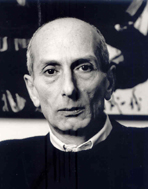
Born in the Parisian suburb of Asnières in 1937, MARCEL COHEN is the author of many books of short narrative prose in French. Several of his works have been translated into English, including Mirrors and The Emperor Peacock Moth. He has also published a collection of interviews with Edmond Jabès, From the Desert to the Book. In 2002 the Académie Française awarded Cohen the Prix Roland de Jouvenel, and in 2024 he was named by the Académie the recipient of the Grand Prix de Littérature Paul Morand for his life’s work. He lives in Paris.
RAPHAEL RUBINSTEIN’s books include Negative Work: The Turn to Provisionality in Contemporary Art; The Miraculous; and A Geniza. Since 2008 he has been Professor of Critical Studies at the University of Houston School of Art. He is a recipient of the award of Chevalier in the Order of Arts and Letters from the French government. He lives in New York.
Argentine-born writer, translator, and editor ALBERTO MANGUEL is the author of numerous works of non-fiction including The Dictionary of Imaginary Places (co-written with Gianni Guadalupi), A History of Reading, The Library at Night, Homer’s Iliad and Odyssey: A Biography, and novels such as News From a Foreign Country Came.
“In [the book’s] folds and echoes, songs and limericks, curses and sayings, the cities of exile are illuminated.”
BookForum
“A memoir that meditates on the possibility of a personal and historical recovery through the act of translation…. A unique combination of Judeo mysticism and faith in the unconscious motive fuels [the author’s] intense belief: ‘For me the imaginary is simply what we have forgotten.'”
The Brooklyn Rail
“A gem of a book…. Cohen captures the experience of the Sephardim, expelled from Spain and dispersed through the East … juxtaposing it with the death of the ancient language, Ladino, that animated their everyday lives. [A] beautifully crafted memoir.”
Jewish News of Greater Phoenix
To purchase the new Wesleyan/Ibis edition click here.